Fall Decorating with Apples
How to Create a Beautiful Mantel Using What You Have
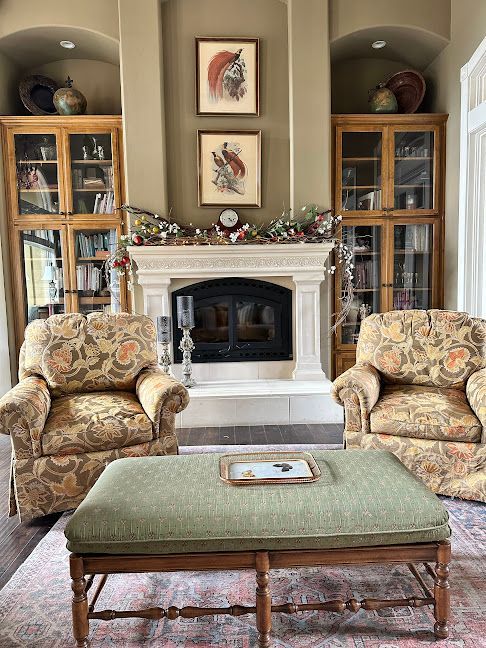
You don't need to buy a whole new collection of fall décor to make your home feel ready for autumn. Sometimes the best decorating ideas are already in your home—or growing right outside your door.
That's exactly how I approached my fall mantel this year.
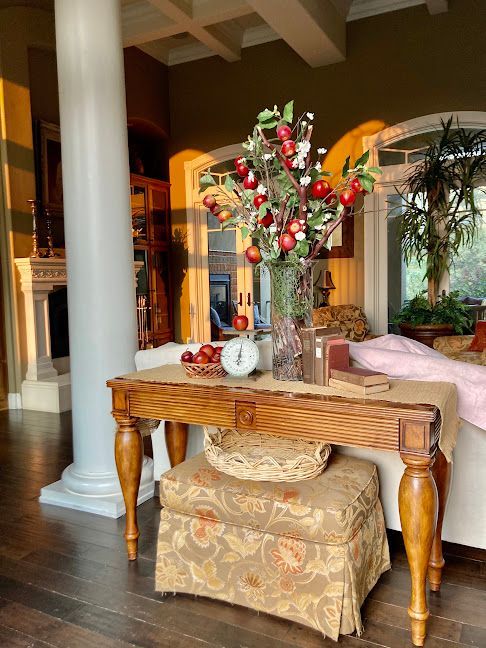
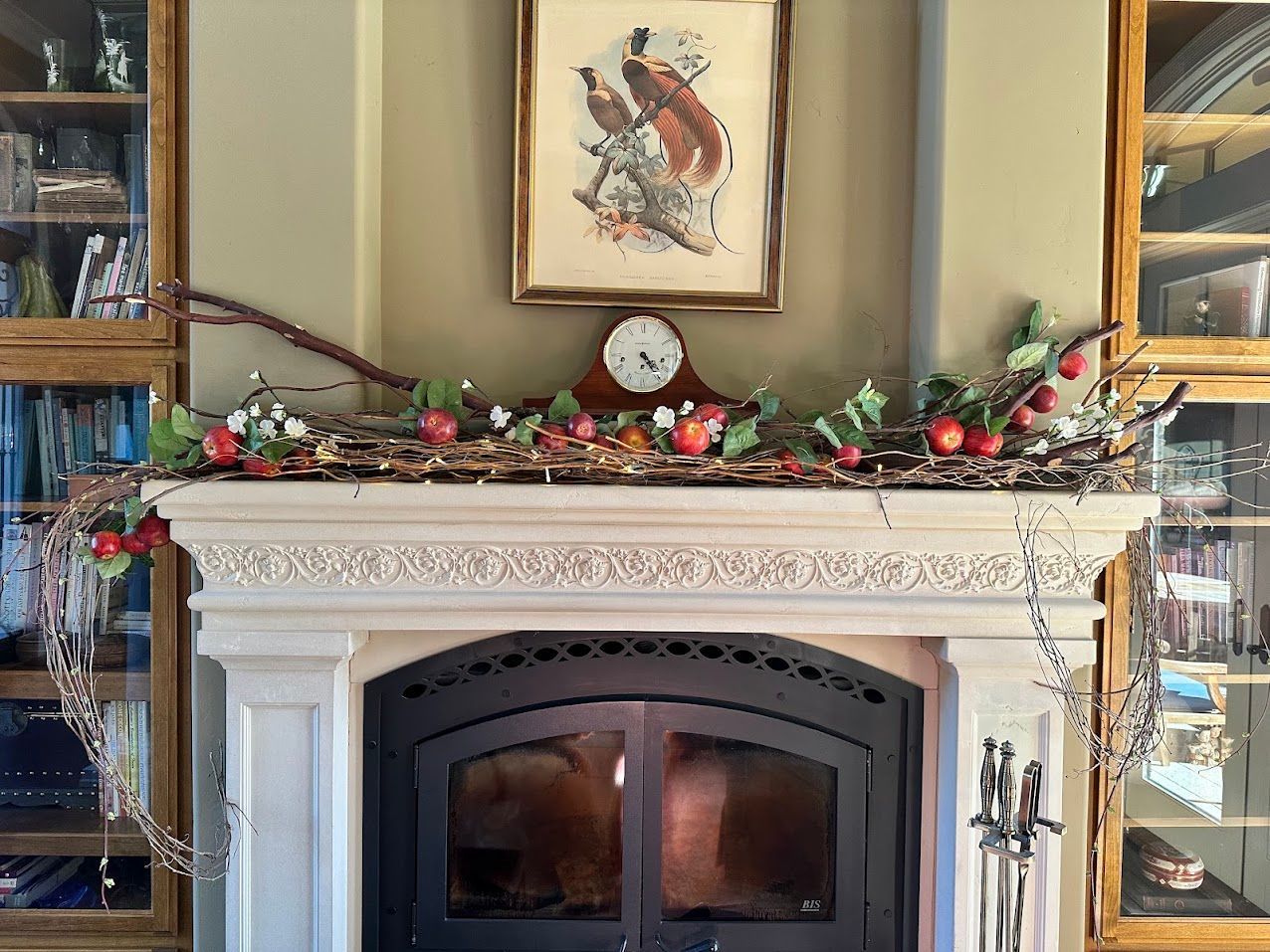
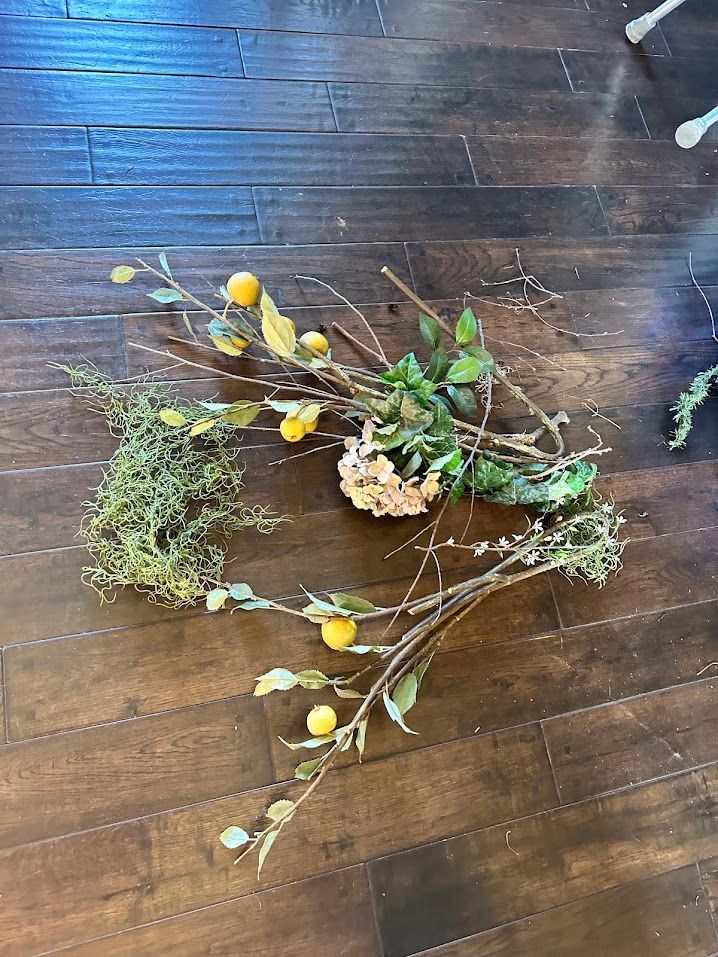
I started thinking about these apple branches I have used many times for my September decorating. I purchased them in 1993 in San Luis Obispo at the famous Apple Farm Lodge. They had a huge sale in the fall of their old stock and decorating items, and I loved these. I purchased them a few prances at a time.
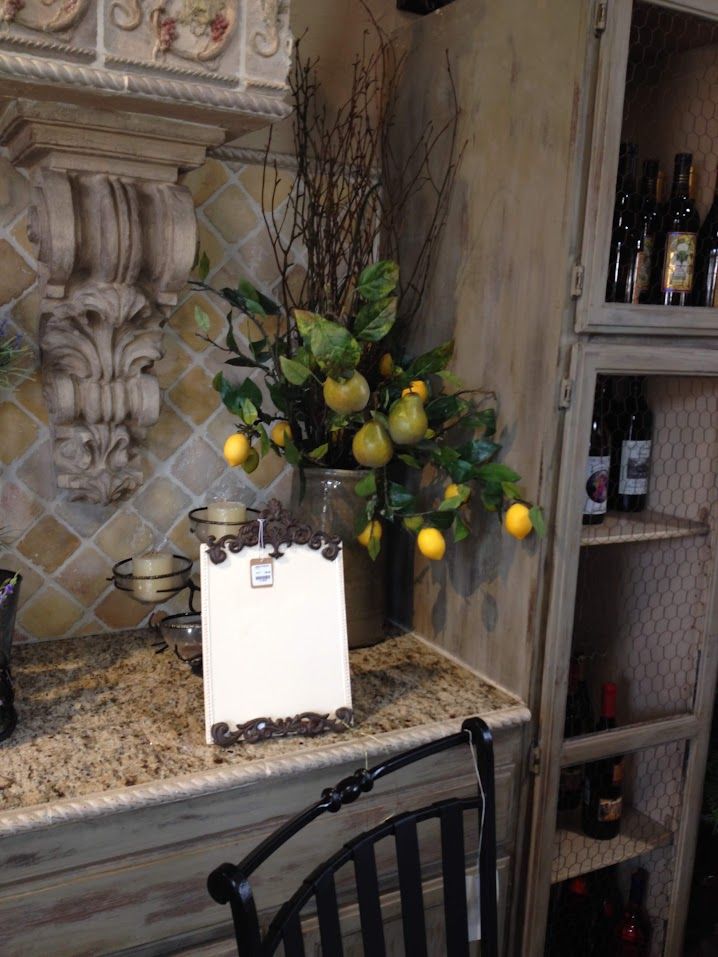
Here are some other types of branches: pear and lemon!
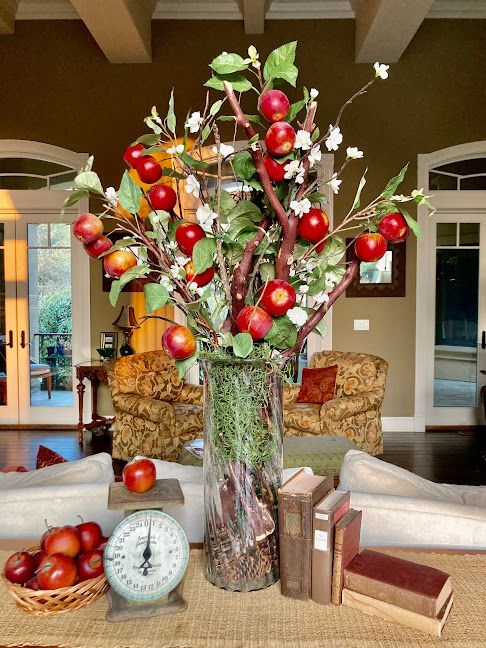
I started with apples, branches from our yard, a few things from my Christmas stash, and a little creativity.
The result is a fall vignette that feels natural, collected and personal rather than overly decorated.
And that's really the heart of my “Use What You Have” approach to decorating.
Start by Shopping Your Own Home
Before you head to the store, take a walk through your house.
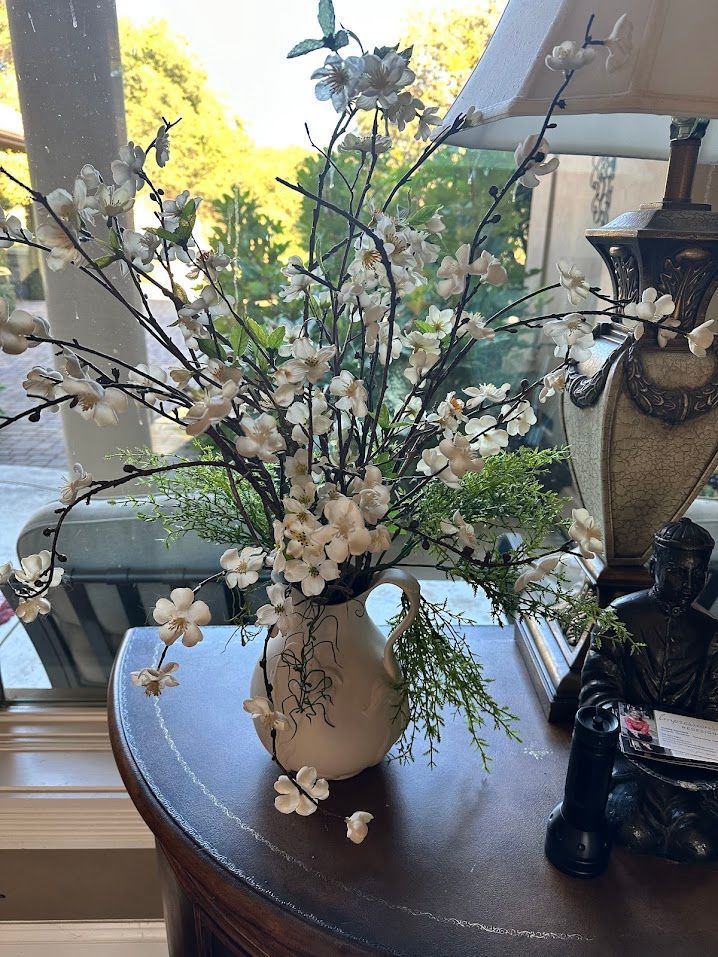
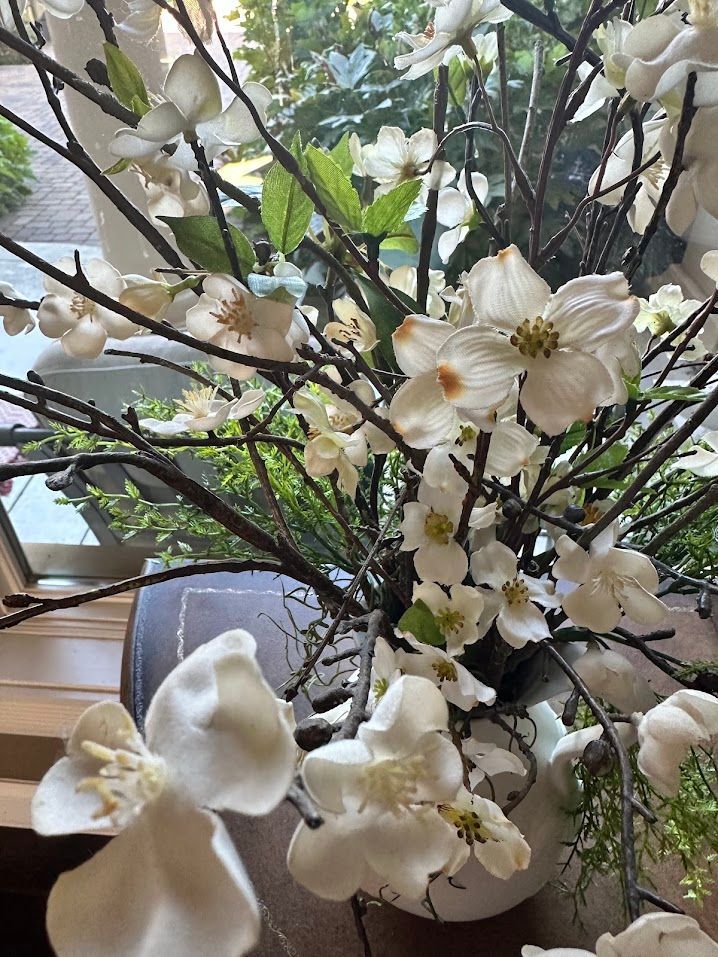
Look in the cabinets, closets and storage areas. Look at things you've used for Christmas, spring or even a previous decorating project. This sprint apple blossom arrangment was what i made in April, I just pulled it down from my cabinet to use the florals again.
Ask yourself:
“How could I use this differently?”
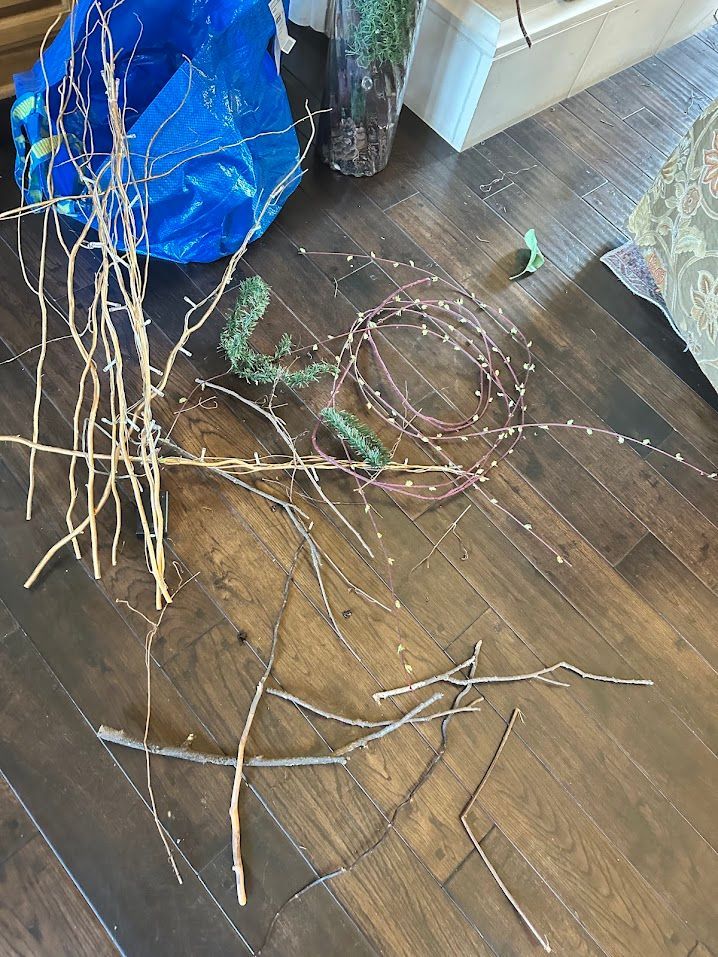
For this mantel, I started with twigs from our yard. I also pulled out the lighted twigs I normally use in my Christmas decorating.
Why wait until December?
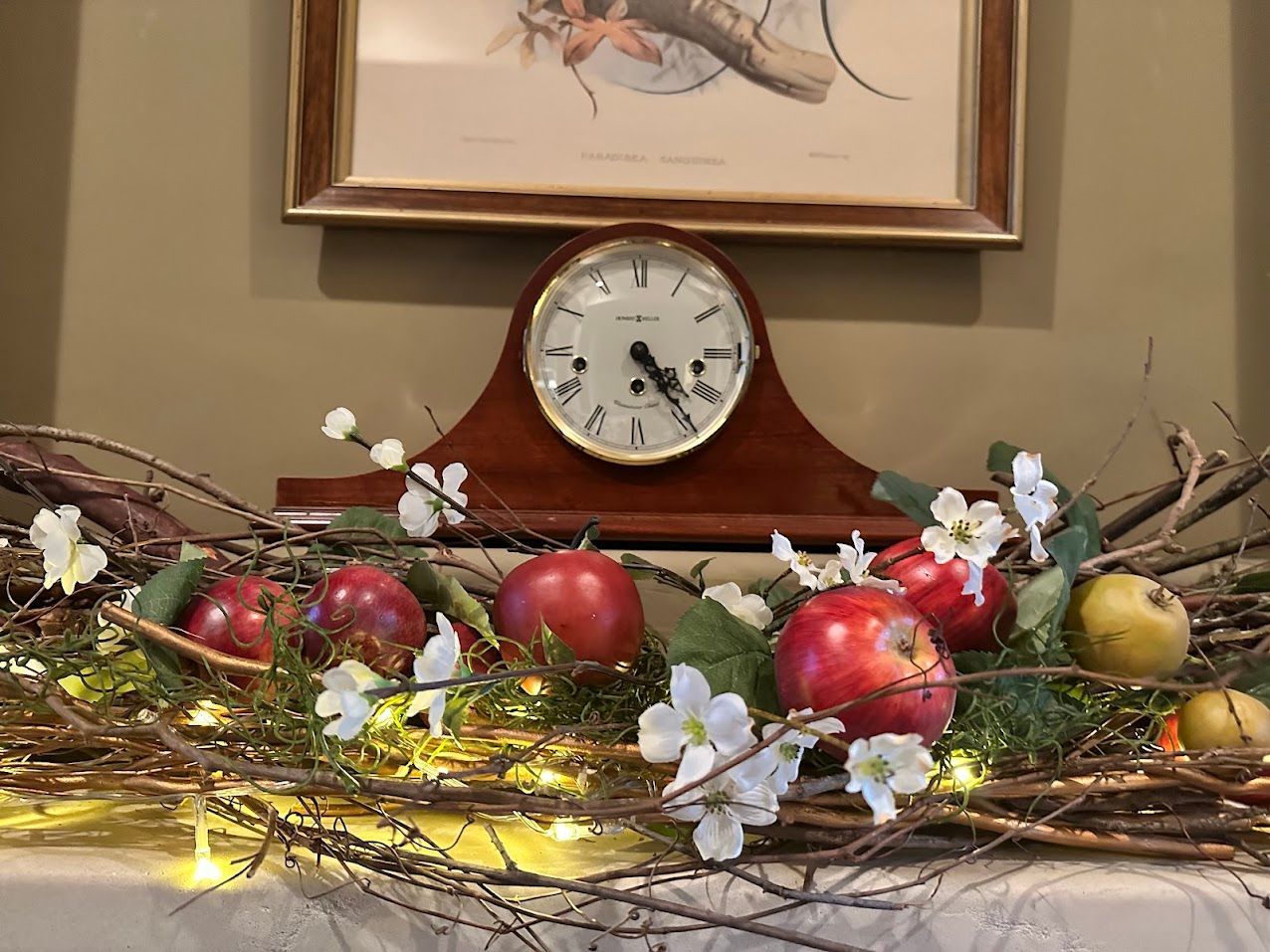
The little gold sticks of lights add warmth and sparkle, but because I combined them with natural branches and apples, they don't read as Christmas.
Designer Secret: Don't Let an Item Dictate the Season
A decorating accessory doesn't necessarily belong to just one holiday or season.
A basket can be fall, Christmas or spring.
A glass vase can change with whatever you put inside it.
Branches can become a Christmas tree one month and a fall arrangement another.
It's often the combination—not the individual object—that creates the seasonal feeling.
Step 1: Start with Something Natural
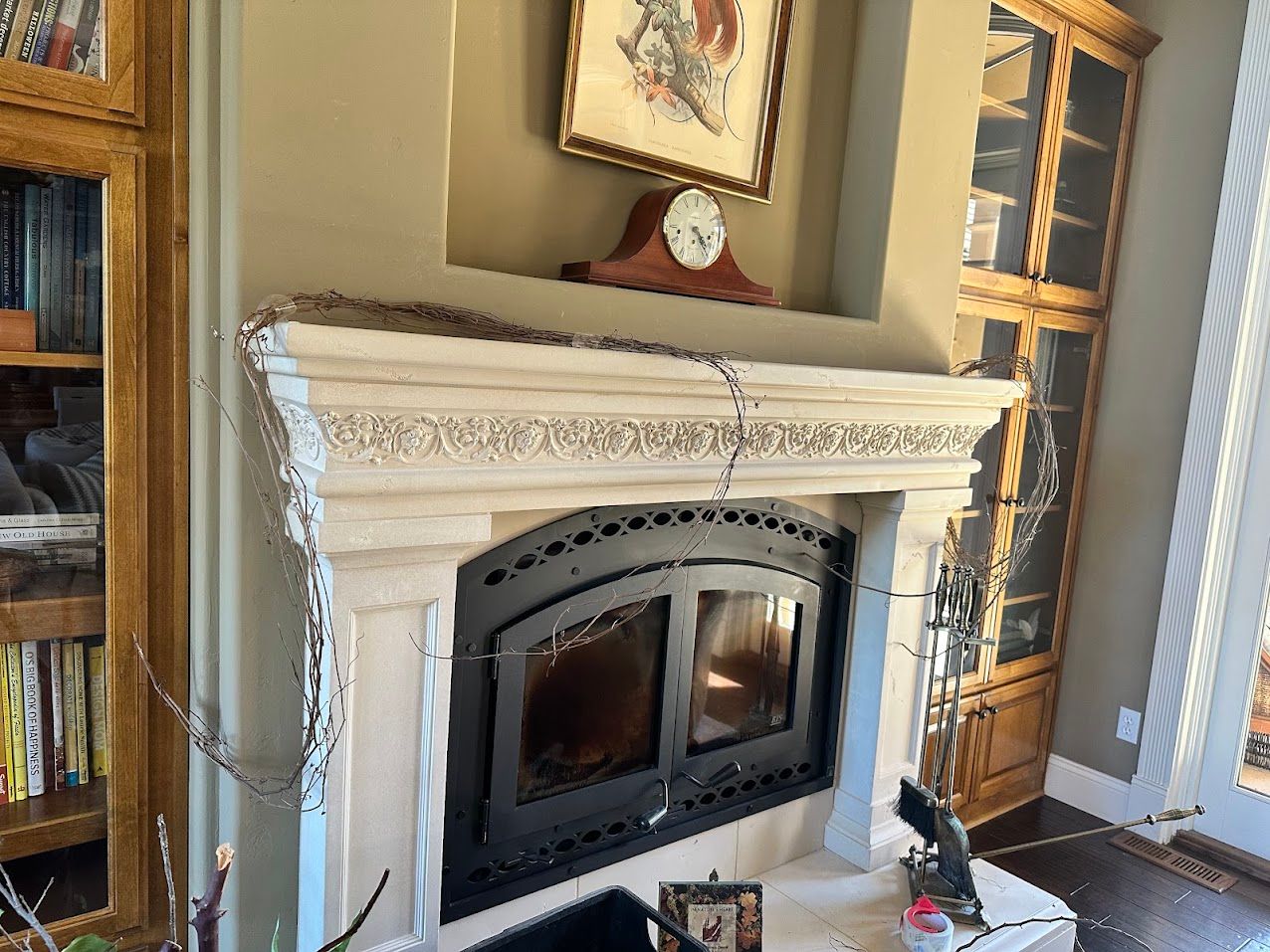
Next came my apple branches.
I love using branches because they instantly bring the outdoors inside. They add height, movement and texture—and they make a mantel feel much more organic.
When you're gathering from nature, don't worry about finding the “perfect” branch.
Look for interesting shapes.
One that curves.
One that forks.
One that has an unusual texture.
Those imperfections are what give an arrangement personality.
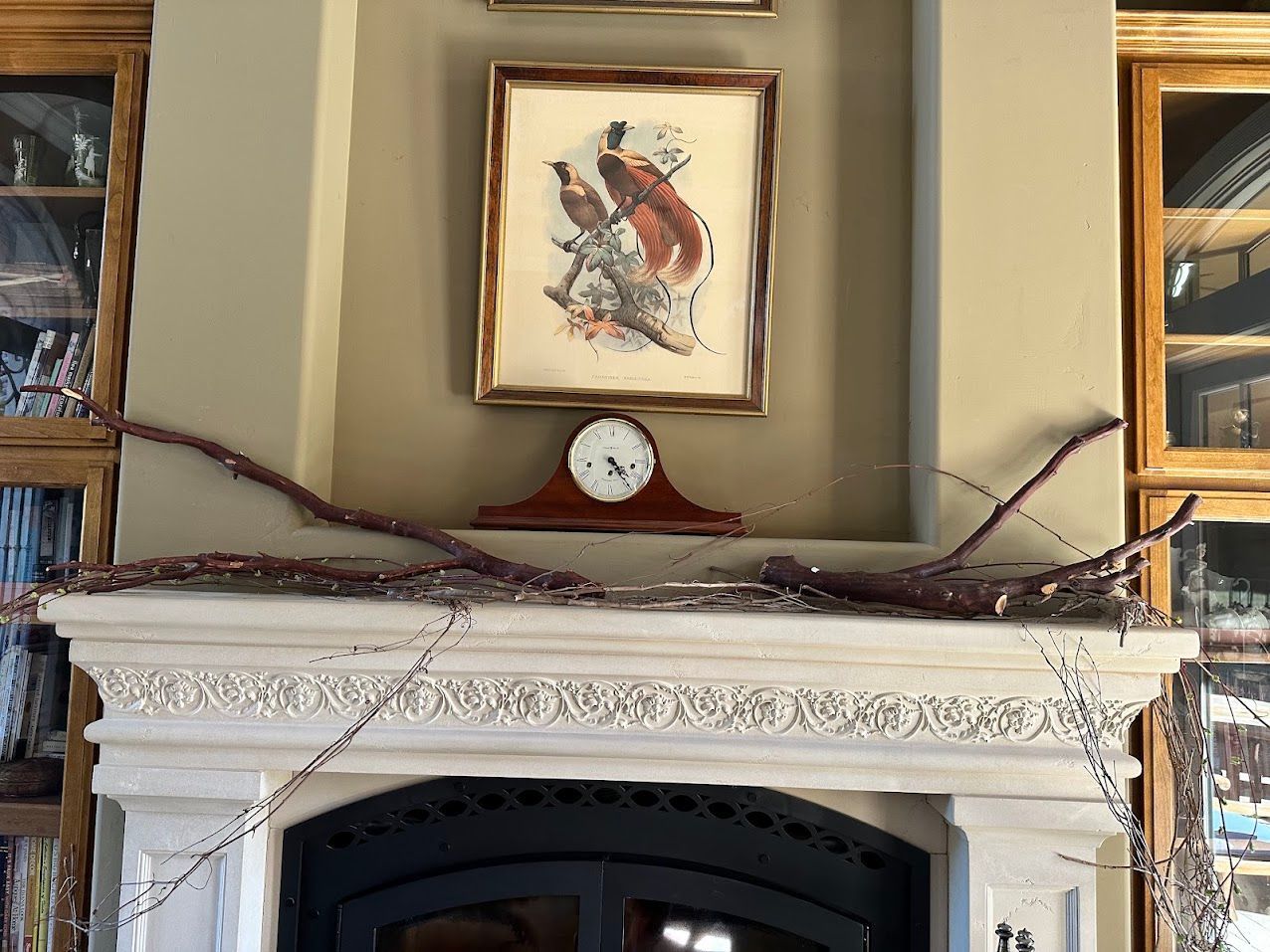
And don't overlook your own backyard. Before buying faux branches, take a look around outside. You may already have exactly what you need. Like these larger Manzanita Branches
Step 2: Mix Apples at Different Stages
For the apples, I intentionally used different sizes and colors.
The larger apples are the familiar red apples we think of for fall.
The smaller apples are more like apples before they've fully turned red. They may even be crab apples. I just loved the smaller scale and the softer green color.
That little bit of variation makes the arrangement much more interesting.
Don't Make Everything Match
Try combining:
- Large and small
- Red and green
- Smooth and textured
- Fresh and weathered
- Purchased and found
Nature doesn't arrange everything in identical sizes and colors.
Neither should we.
Step 3: Add Something Unexpected
I also love adding apple blossoms.
They give the arrangement such a fresh look.
When we think about fall decorating, we often immediately reach for pumpkins, orange leaves, pinecones and warm brown colors.
But fall doesn't have to mean everything is orange.
The lighter blossoms provide contrast and keep the arrangement from becoming too heavy.
Designer Secret: Add One Unexpected Element
If a vignette starts feeling too predictable, add something that isn't quite what you would expect.
A little green in an otherwise warm fall arrangement.
Something delicate among heavier branches.
Something shiny with natural materials.
Something vintage with something new.
That unexpected element is often what makes an arrangement feel collected instead of “decorated.”
Step 4: Let the Arrangement Spill Over
Here's another little trick I use when decorating a mantel:
Don't be afraid to go over the edge.
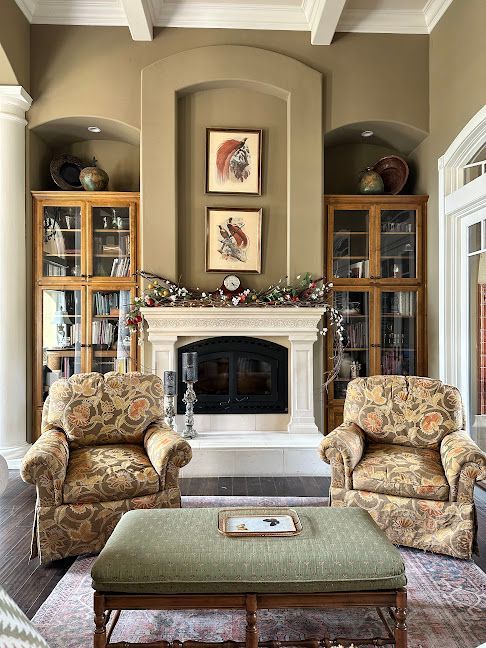
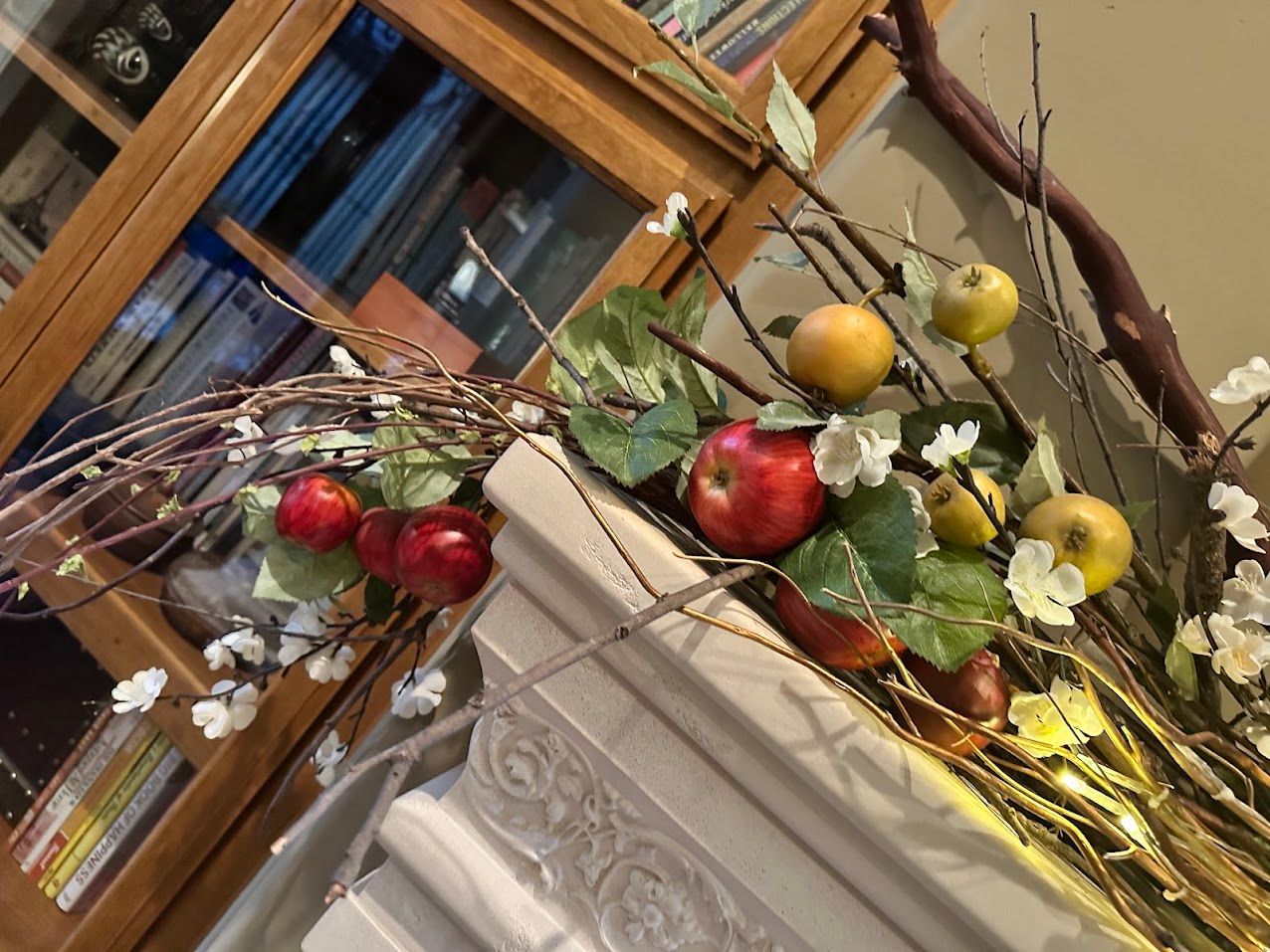
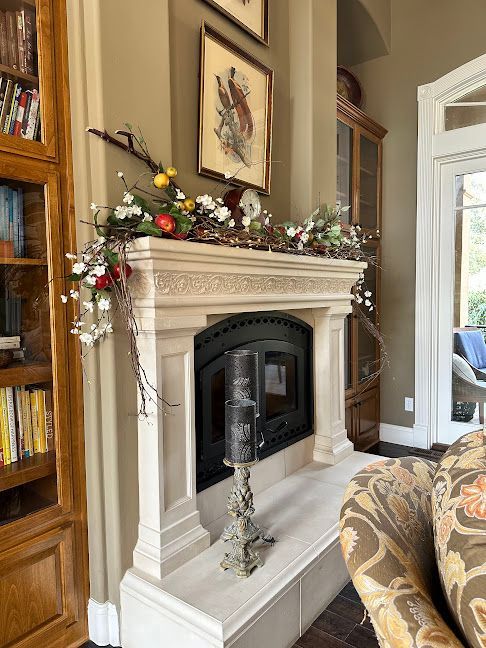
You'll notice that I allowed some of the apples to spill down over one side of the mantel.
The other side doesn't.
That's intentional.
I didn't want both sides to look identical.
Balance Does Not Mean Symmetry
This is an important distinction.
Symmetry:
Both sides look essentially the same.
Balance:
The visual weight feels right, even though the two sides are different.
I generally prefer balance.
Let one side be a little fuller.
Let something extend beyond the edge.
Let the other side have a little breathing room.
It makes the arrangement feel more relaxed and natural.
Balance Does Not Mean Symmetry
This is an important distinction.
Symmetry:
Both sides look essentially the same.
Balance:
The visual weight feels right, even though the two sides are different.
I generally prefer balance.
Let one side be a little fuller.
Let something extend beyond the edge.
Let the other side have a little breathing room.
It makes the arrangement feel more relaxed and natural.
Step 5: Create Layers
When you're putting together a mantel, table or coffee table vignette, think about height and depth.
I like to think:
Tall + medium + low.
The branches provide height.
The apples create the middle layer.
Smaller objects fill in the lower areas.
And don't put everything in one straight line.
Bring some things forward.
Push others back.
Overlap a few pieces.
That layering creates depth and keeps your eye moving through the arrangement.
Step 6: Repeat Your Idea Around the Room
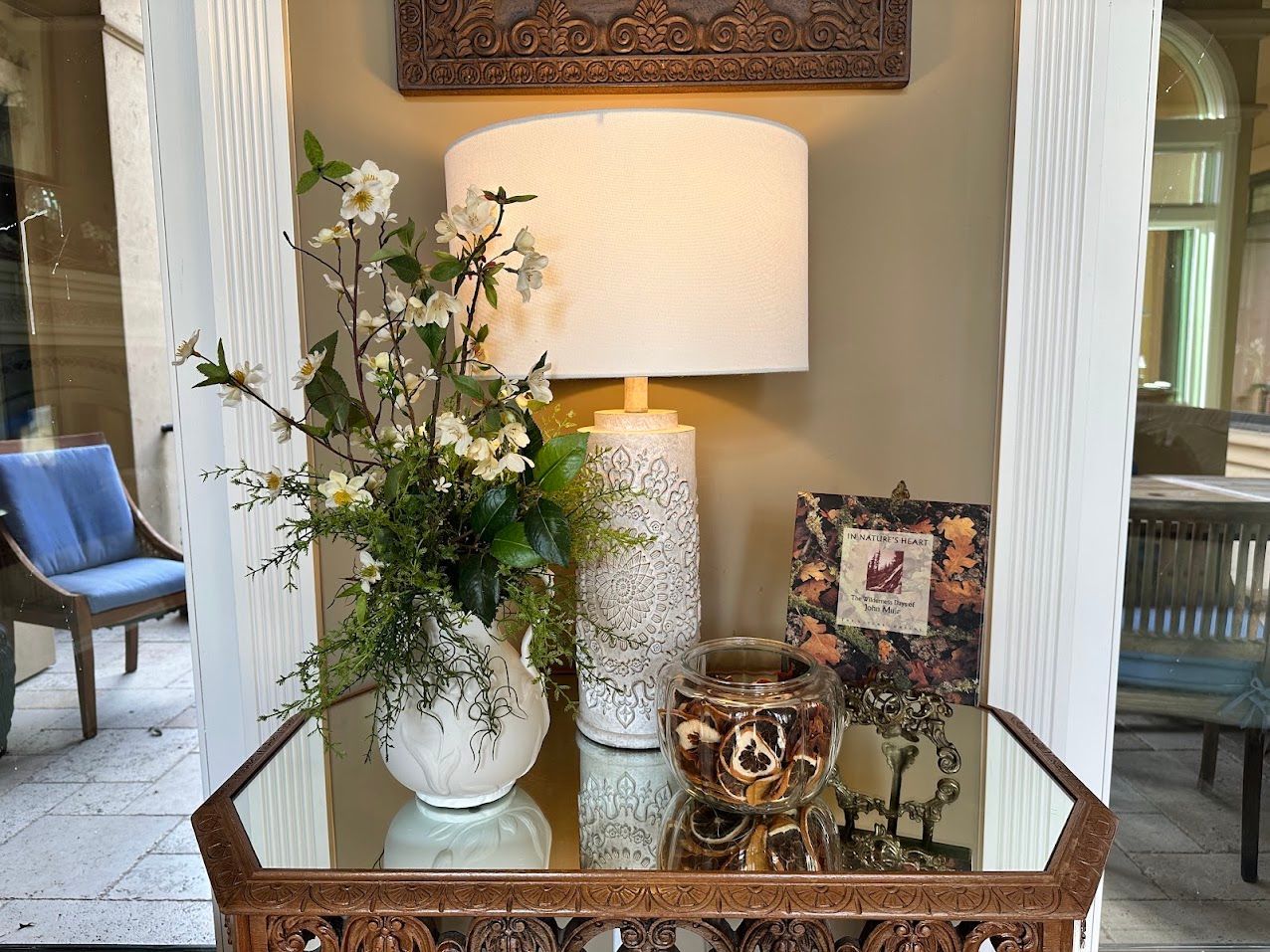
Across the room, I created a smaller vignette featuring an
MMA (Metropolitan Museum of Art) 1993 Jonquil Pitcher in white Parian bisque. I love its soft, porous finish and the beautiful three-dimensional botanical relief. I filled it with the left over apple blossoms and greenery, then added dried orange slices I made last year and my copy of In Nature’s Heart: The Wilderness Days of John Muir. Simple right?
Repeat around the house:
You don't have to put every apple on the mantel.
In fact, I like to repeat an idea in different places throughout the house.
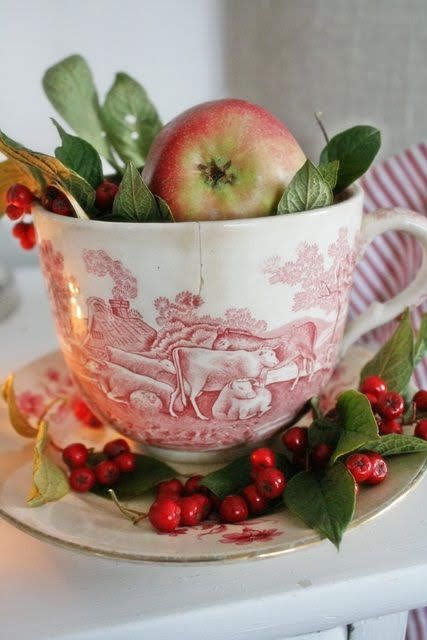
If you've introduced apples on the mantel, you could add a bowl of apples in the kitchen.
Maybe a smaller bowl goes on the dining table.
Or a few apples sit in a pretty dish on the entry table.
You don't have to duplicate the entire arrangement.
Just repeat the element.
This creates a connection between the rooms without making everything match.
My Favorite Fall Decorating Rule
Before you shop, walk outside.
Look at the trees.
Look at the branches.
Look at what's growing in your yard.
Then walk through your house.
Open the cabinets.
Look through your Christmas stash.
Move something from another room.
Pull out a bowl you haven't used in years.
You might be surprised by what you already have.
I've always believed that decorating isn't about having the newest things.
It's about seeing what you already have differently.
Take something familiar.
Move it somewhere unexpected.
Combine it with something from nature.
Change the scale.
Change the color story.
Layer it.
Edit it.
And let your home tell a story that feels like you.
That's the beauty of decorating with what you have.
You don't have to buy more to love your home more.
Until next time! XOXO Jonelle'
Thanks for joining our insiders group!
Whooo Hoo! I'm so excited you are hear!
Our newsletter comes out at the beginning of each month and is another medium through which you can track the trends, get inspired and discuss design styles.
It’s a colorful, fun update that contains links, blog posts, favorite creative “pins”, and exciting design ideas from Facebook. In addition, you will be the first to hear about our "Date With Design" monthly webinars, promotions, speaking dates, and our Home Decorator Club events.
By signing up you make sure you won't miss a thing!